
Preflex Packaging
GST : 24AASFP5064F1Z1

Call us
07971191049
Call us
07971191049
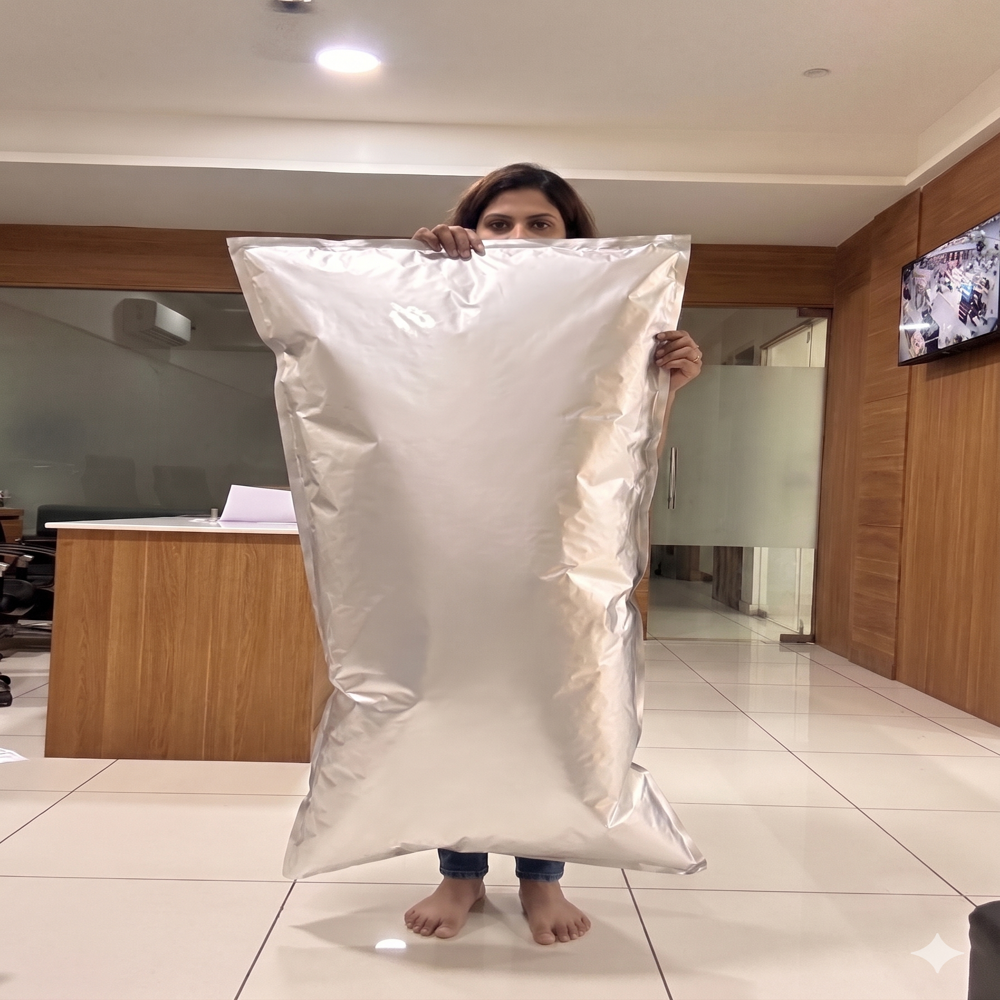
Material & Appearance: These are Mylar or aluminum foil barrier bags featuring a highly reflective, metallic silver finish. They are constructed from laminated layers designed to provide a heavy-duty protective shield.
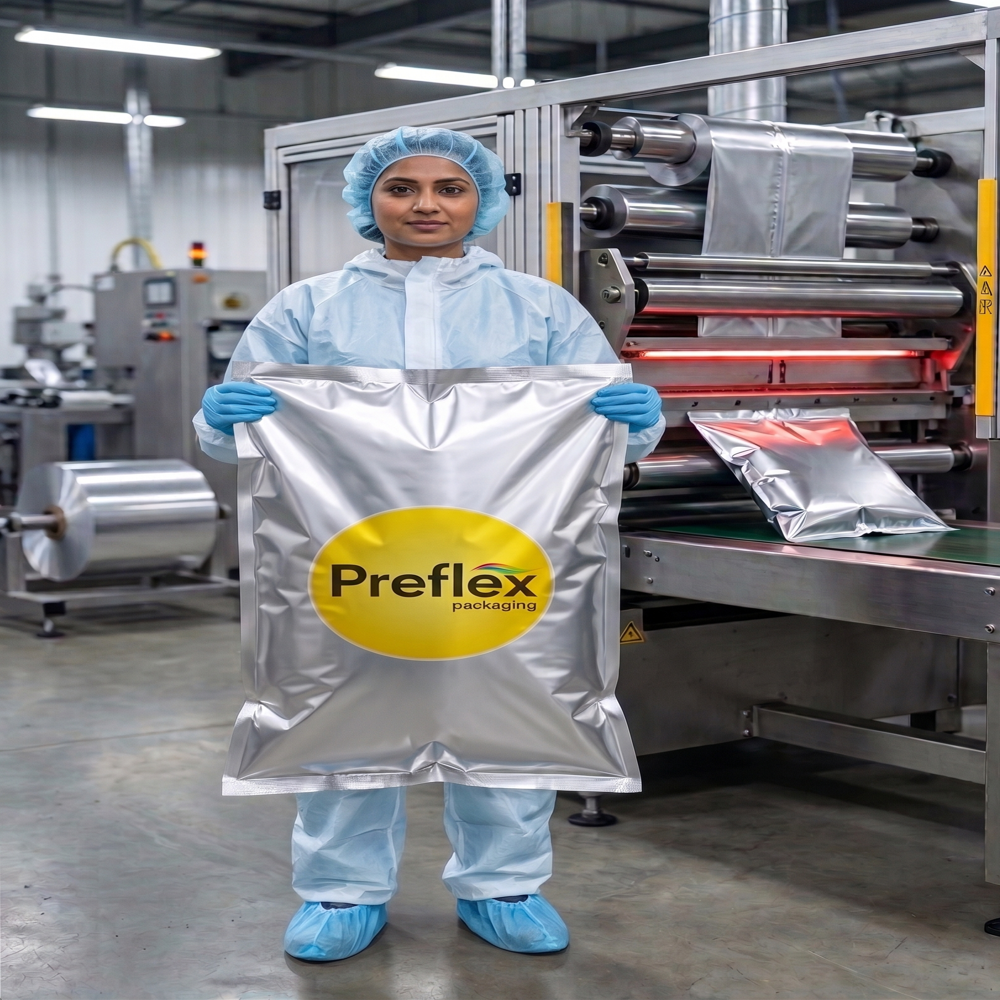
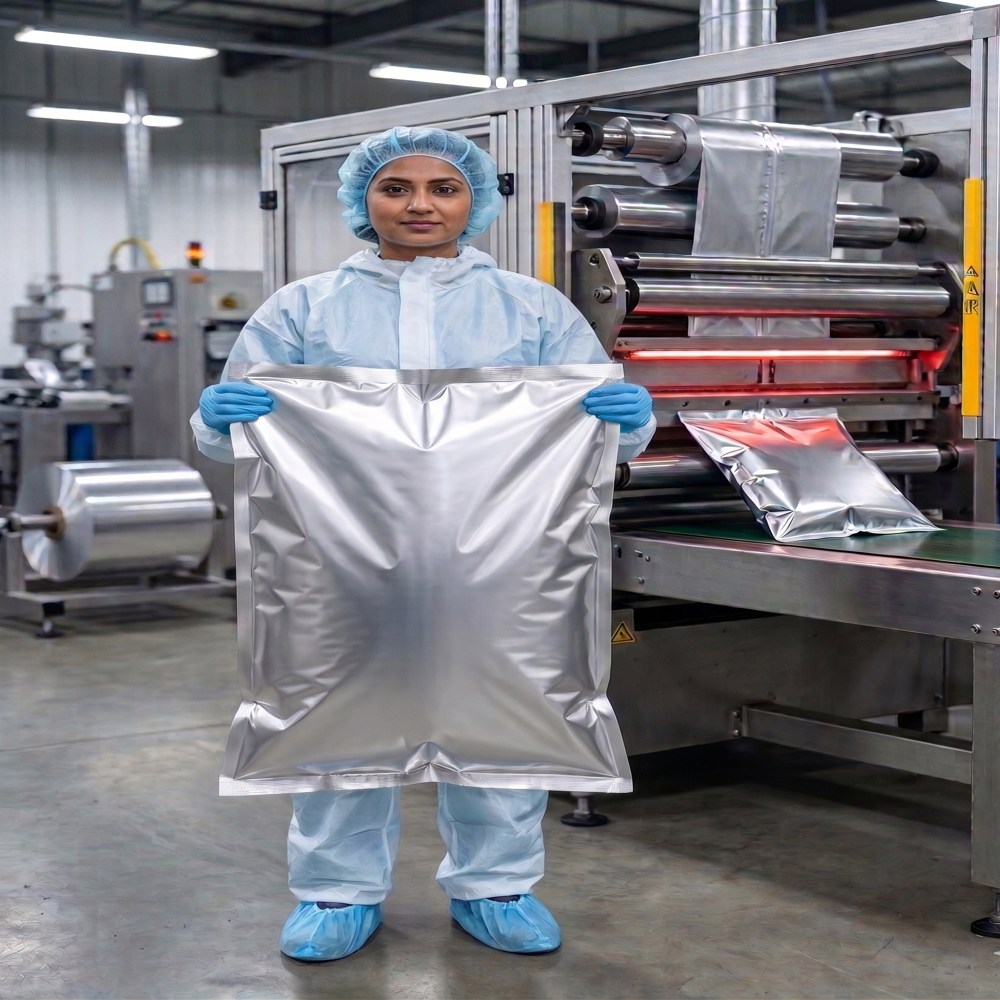
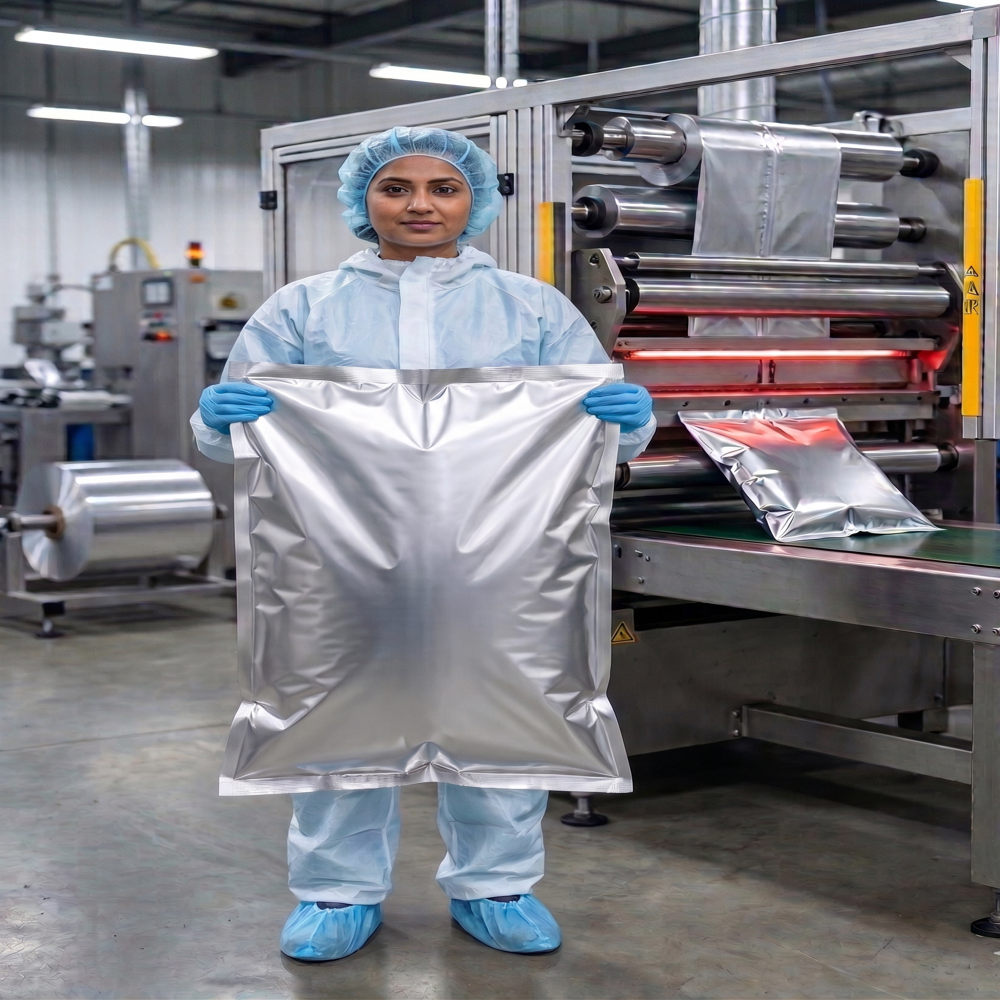
Size & Capacity: The image highlights a large-capacity bulk bag held by the worker, alongside a smaller, individual-sized pouch on the conveyor belt, showing the range of sizes this machinery can handle.
Functionality: These bags are engineered as high-barrier packaging. They protect the contents from moisture, oxygen, light, and aroma transfer, which drastically extends the shelf life of the enclosed products.
Production Process: The bags are shown on an industrial packaging assembly line, specifically a Form-Fill-Seal (FFS) or automated heat-sealing machine. The foil roll on the left feeds material into the system, which then shapes, fills, and heat-seals the edges.
Industry Standard: The worker is wearing full cleanroom attire (hairnet, face cover, protective suit, gloves, and shoe covers), strongly indicating that these bags are being manufactured for highly regulated industries like pharmaceuticals, medical devices, or specialized food processing where contamination control is critical.
Here is a detailed breakdown of how these bags are utilized in a pharmaceutical environment:
FDA & EU Regulation: The raw materials used to manufacture these bags must be certified non-toxic, odorless, and compliant with international standards like FDA 21 CFR and EU directives for direct contact with medicine.
Contamination-Free Materials: The inner liner uses virgin, surfactant-free, and often non-animal-origin polymers. This guarantees that no chemicals leach from the plastic bag into the pharmaceutical product.
Medical Alloys: The aluminum foil layers typically utilize specific high-purity alloys (such as 8011 or 8021) optimized to eliminate microscopic pinholes, ensuring absolute isolation.
As seen by the worker's complete personal protective equipment (PPE)including the hairnet, full body gowning, and nitrile glovesthese bags are processed inside ISO-certified cleanrooms.
Particulate Control: The environment uses HEPA filtration to control airborne dust and microbial particles.
Sterilization Compatibility: These bags are engineered to undergo terminal sterilization processessuch as Gamma Irradiation or gas sterilizationwithout degrading the physical layers or weakening the seals.
Pharma-grade foil bags are "laminated," meaning they are made of multiple micro-layers bonded together. A typical cross-section includes:
Outer Layer (PET/Mylar): Provides high tensile strength, puncture resistance, and printability for tracking metrics like lot numbers and expiration dates.
Middle Layer (Alu Foil): Acts as a total barrier against moisture vapor (MVTR) and oxygen transmission (OTR). This stops active pharmaceutical ingredients (APIs) from degrading or absorbing ambient humidity.
Inner Layer (LDPE/Heat-Seal Layer): A chemically inert plastic layer that allows the machine's sealing jaws to melt the edges shut safely, forming a hermetic, tamper-evident seal.
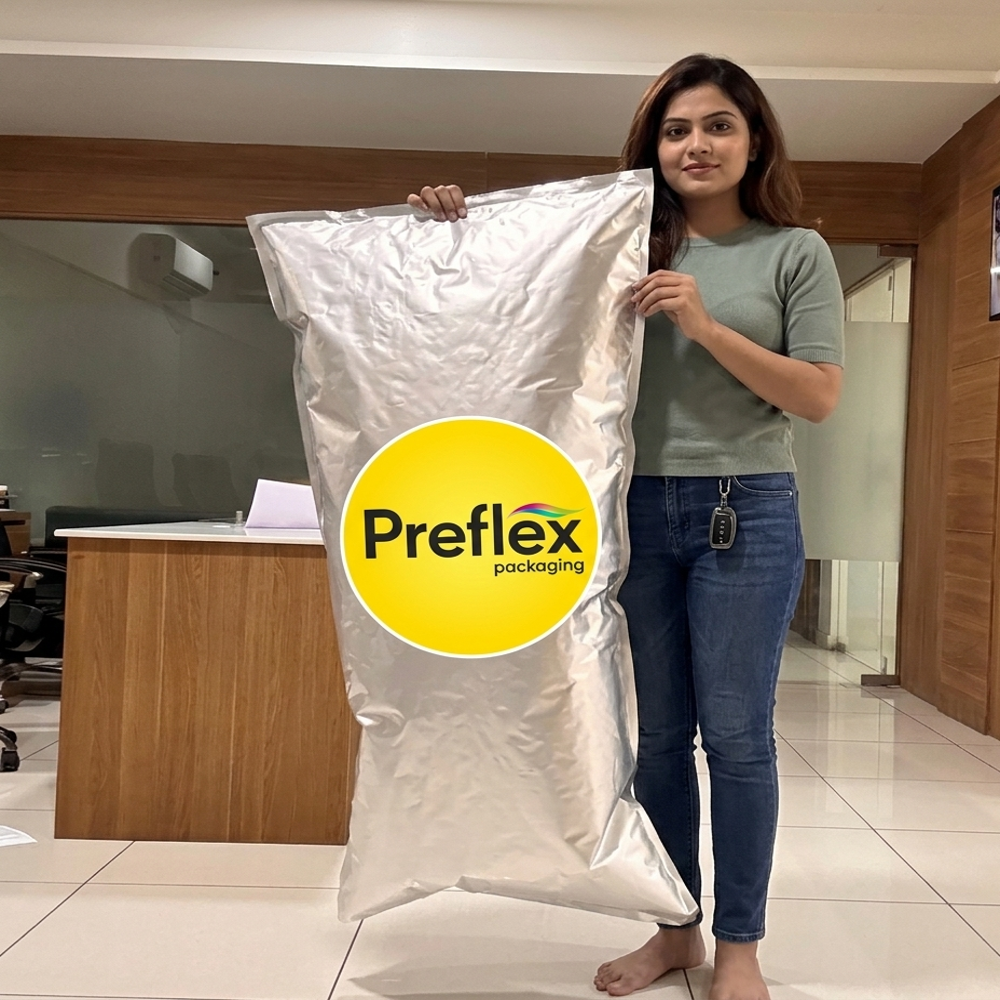
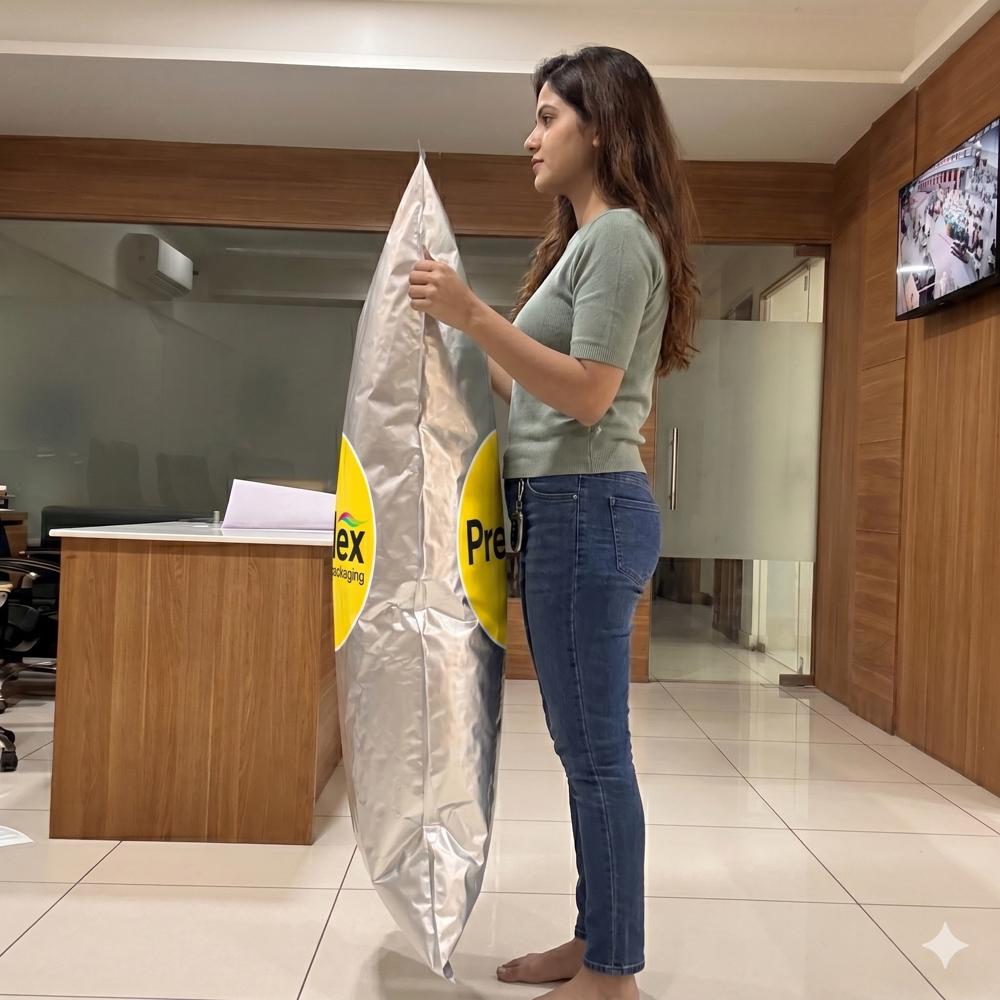
In a bulk sizing like the large bag held by the worker, these are generally used for:
Active Pharmaceutical Ingredients (APIs): Transporting raw medicinal powders or chemical compounds between laboratory facilities before they are pressed into tablets or mixed into liquids.
Bulk Tablets/Capsules: Storing mass quantities of manufactured pills securely before they are moved to final blister-packaging lines.
Biologics & Medical Devices: Packaging moisture-sensitive diagnostic kits, surgical components, or freeze-dried vaccines that require strict environmental stabilization without relying heavily on modified-atmosphere warehouses.
In pharmaceutical manufacturing, packaging is not merely a container; it is an integral component of the drug delivery and preservation system. Active Pharmaceutical Ingredients (APIs), bulk tablets, capsules, and sensitive medical devices require a level of environmental protection that standard plastics simply cannot provide.
The large-capacity, multi-layer aluminum foil barrier bags (commonly referred to as Mylar or foil laminate bags) processed on automated Form-Fill-Seal (FFS) systems represent the gold standard for high-barrier bulk packaging. When utilized within an ISO-certified cleanroom environment by pharmaceutical-grade companies, these bags offer unparalleled advantages across regulatory compliance, product stability, supply chain efficiency, and structural integrity.
The primary advantage of multi-layer foil bags is their near-zero permeability, providing an absolute barrier against the environmental catalysts that cause chemical and physical degradation in pharmaceuticals.
Many pharmaceutical compounds, particularly hygroscopic powders and effervescent tablets, are highly sensitive to ambient humidity. Moisture absorption can lead to caking, hydrolysis, reduced potency, or complete degradation of the active ingredient. The core aluminum foil layer in these bags achieves an MVTR that approaches absolute zero, ensuring that the internal relative humidity remains completely stable regardless of external climatic shifts.
Oxidation is a primary pathway for chemical degradation in many active ingredients. Exposure to oxygen can alter the molecular structure of a drug, rendering it ineffective or potentially toxic. By utilizing automated vacuum sealing or nitrogen flushing alongside these high-barrier bags, pharmaceutical manufacturers can maintain an oxygen-free micro-environment, indefinitely halting oxidative reactions.
Many biological materials, vitamins, and complex chemical formulations are photosensitive. Exposure to ambient light or ultraviolet (UV) radiation can trigger photolysis. Because the metallic layer is completely opaque, it offers 100% protection against the entire spectrum of light, eliminating the need for specialized darkroom storage or secondary tinted outer packaging.
Pharmaceutical products demand packaging materials that interact minimallyor not at allwith the enclosed substance. Foil laminate bags are engineered specifically to prevent contamination through leaching or absorption.
+-------------------------------------------------------------+ | OUTER LAYER: PET / Mylar (Mechanical & Puncture Strength) | +-------------------------------------------------------------+ | MIDDLE LAYER: Pure Aluminum Foil (100% Gas/Light Barrier) | +-------------------------------------------------------------+ | INNER LAYER: Virgin, Food/Pharma-Grade PE (Inert Contact) | +-------------------------------------------------------------+
The innermost layer of these bags, which comes into direct contact with the pharmaceutical product, is constructed from virgin, additive-free, and surfactant-free low-density polyethylene (LDPE) or specialized polymers. Unlike commercial-grade plastics, these layers contain no plasticizers or heavy metals that could migrate into the active ingredients, ensuring compliance with strict US Pharmacopeia (USP) and European Pharmacopoeia (EP) standards.
Many therapeutic agents rely on volatile compounds or specific formulations that carry distinct aromas or chemical bases. These bags prevent the transmission of volatile organic compounds (VOCs). The active components cannot escape through the packaging material, and external odors or contaminants from the warehouse environment cannot penetrate the barrier, preserving the exact chemical composition of the batch.
Beyond chemistry and biology, the physical characteristics of bulk foil packaging provide substantial logistical and financial advantages over rigid alternatives, such as plastic drums or stainless steel intermediate bulk containers (IBCs).
Before they are filled, rolls of foil laminate or flat, unfilled bags require a fraction of the warehouse footprint required by empty rigid drums. A single pallet can hold thousands of flat bulk foil bags, whereas the equivalent volume in rigid plastic drums would require an entire warehouse section. This significantly lowers inbound freight costs and warehouse overhead.
When using rigid stainless steel or plastic drums, pharmaceutical companies must implement rigorous, validated cleaning protocols between batches to prevent cross-contamination. This process consumes massive amounts of purified water, specialized detergents, time, and labor. Foil barrier bags function as a single-use, disposable matrix, completely bypassing the need for container washing, drying, and subsequent cleanliness validation tests.
By halting the entry of oxygen, moisture, and light, these bags significantly extend the retest dates and shelf life of raw materials and bulk intermediates. This allows pharmaceutical companies to manufacture or purchase raw materials in larger, more economical batches without fearing premature degradation during long-term storage or international maritime transport.
Pharmaceutical manufacturing lines operate at high speeds and demand materials that can withstand rigorous mechanical stress without failing.
The outer layer of the laminate structure is typically composed of oriented polyester (PET) or nylon. This gives the bag immense tensile strength and resistance to tears, abrasions, and punctures. When handling large bulk volumessuch as the heavy bag shown in the imagethe material can support significant weight and withstand the physical friction of automated transport without tearing open.
The inner polymer layer is optimized for thermal bonding. When passed through the industrial heat-sealing jaws of an automated packaging machine, the plastic melts uniformly to create a hermetic seal. This seal is often as strong as, or stronger than, the material itself, preventing seam failures under pressure during high-altitude shipping or stack loading.
The mechanical strength of the foil laminate allows it to withstand the physical forces of vacuum sealing and gas flushing (such as introducing ultra-pure nitrogen or argon). The bag retains its structural integrity without pinholing or collapsing destructively, maintaining the modified internal atmosphere over years of storage.
| Advantage Category | Specific Benefit | Pharmaceutical Impact |
| Environmental Isolation | Total barrier to $\text{H}_2\text{O}$, $\text{O}_2$, and UV light | Prevents hydrolysis, oxidation, and photolysis. |
| Purity Assurance | Virgin, leach-resistant inner liners | Zero chemical migration into active compounds. |
| Logistical Efficiency | Flat-pack storage & lightweight profile | Minimizes freight costs and warehouse space. |
| Operational Savings | Single-use disposable system | Eliminates expensive drum washing and validation. |
| Process Optimization | Excellent thermal sealing properties | Facilitates fast, automated, tamper-evident sealing. |
The deployment of automated, multi-layer foil packaging systems is a cornerstone of modern pharmaceutical quality assurance. By combining absolute environmental isolation with chemical inertness, cleanroom compatibility, and logistical efficiency, these bags ensure that critical medicinal components remain pure, potent, and safe from the moment they are manufactured until they are processed into final consumer dosages.
Multi-Layer Laminate: A material constructed by bonding multiple layers of distinct films (e.g., plastic and foil) together to combine their strengths.
Mylar / PET / Aluminum Foil: The primary materials used, offering high tensile strength and barrier properties.
MVTR (Moisture Vapor Transmission Rate): The measurement of how much moisture passes through a material; these bags aim for near-zero MVTR.
OTR (Oxygen Transmission Rate): The measurement of oxygen permeability; critical for preventing chemical oxidation.
Hermetic Seal: A completely airtight, vacuum-tight seal that prevents any gas exchange.
Leach-Resistant / Inert Inner Liner: Plastic layers that come in contact with the product without transferring chemicals or impurities.
API (Active Pharmaceutical Ingredient): The raw, bulk medicinal chemicals stored inside these bags before being made into final pills.
USP / EP Compliance: Meeting United States Pharmacopeia or European Pharmacopoeia standards for safe pharmaceutical packaging.
ISO Cleanroom Certified: Manufactured and packed in environments with controlled levels of airborne particulates.
Gamma Irradiation Compatible: Able to withstand radiation sterilization processes without degrading.
Tamper-Evident: Sealing methods that visibly show if the package has been opened or altered.
FFS (Form-Fill-Seal): Automated machinery that shapes the bag from a roll, fills it with product, and seals it in one continuous line.
MAP (Modified Atmosphere Packaging): Replacing the air inside the bag with an inert gas like nitrogen or argon before sealing.
Puncture & Tear Resistance: The structural ability of the bag to withstand rough handling during transport.
Flexible Bulk Packaging: A category of space-saving packaging that replaces rigid storage options like drums or bins.

Price:
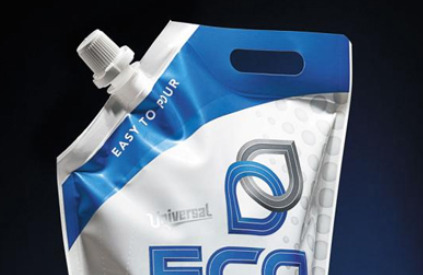
Price 15.0 INR / Kilograms
Minimum Order Quantity : 500 Kilograms
Dimension (L*W*H) : Varies as per package type Meter (m)
Product Type : Other
Filling Capacity : 250 ml to 5 Liters Pcs/hr
Color : Any
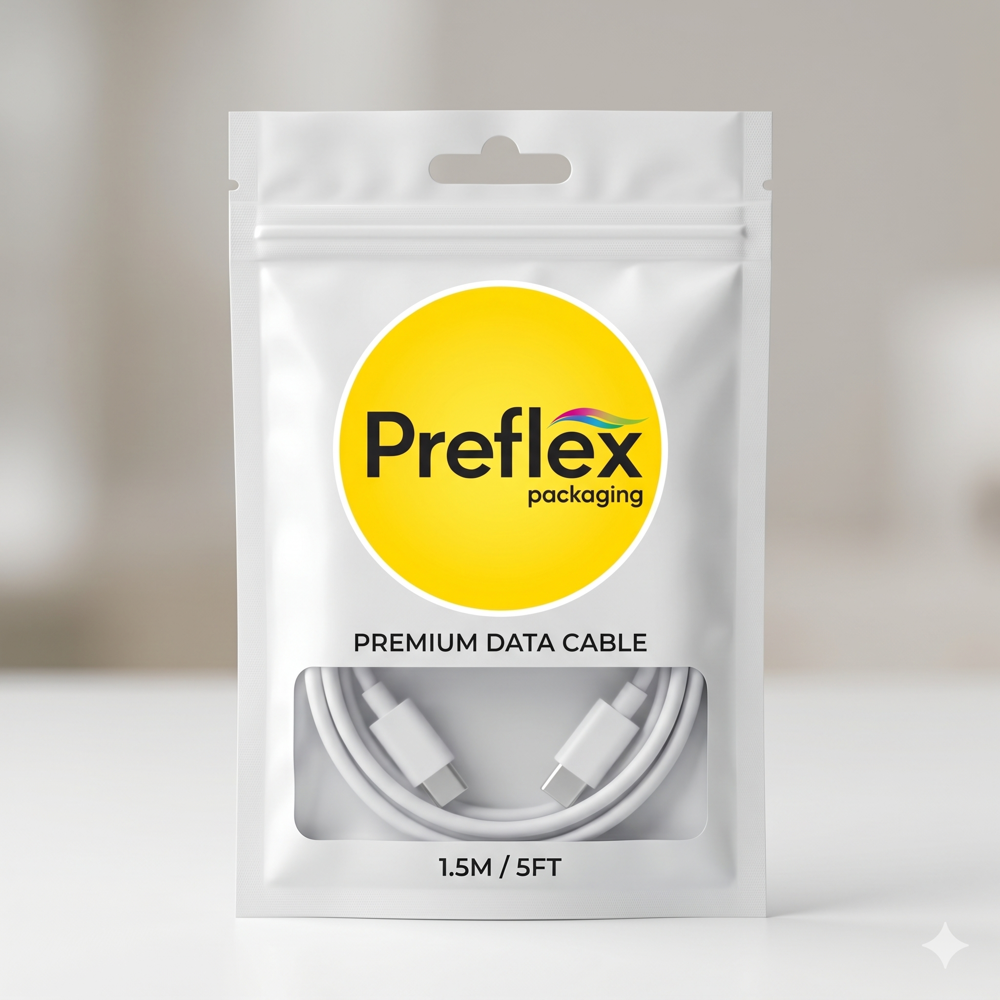
Price 15.0 INR / Kilograms
Minimum Order Quantity : 300 Kilograms
Dimension (L*W*H) : 20 x 10 x 3 cm Millimeter (mm)
Product Type : Other
Filling Capacity : Customizable Kg
Color : Transparent / Custom Print
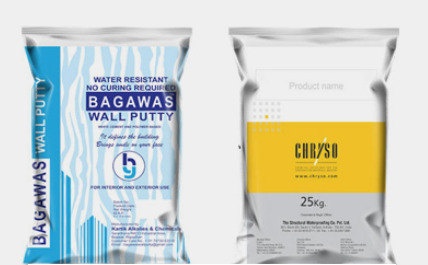
Price 20.0 INR / Kilograms
Minimum Order Quantity : 300 Kilograms
Dimension (L*W*H) : 1200*800*500 mm (customized as per need)
Product Type : Other, Chemical Product Packaging
Filling Capacity : 10100 kg
Color : Blue, White, Transparent, Customized



 English
 Spanish
 French
 German
 Italian
 Chinese (Simplified)
 Japanese
 Korean
 Arabic
 Portuguese
 Send Inquiry
 Send Inquiry

