
Preflex Packaging
GST : 24AASFP5064F1Z1

Call us
07971191049
Call us
07971191049
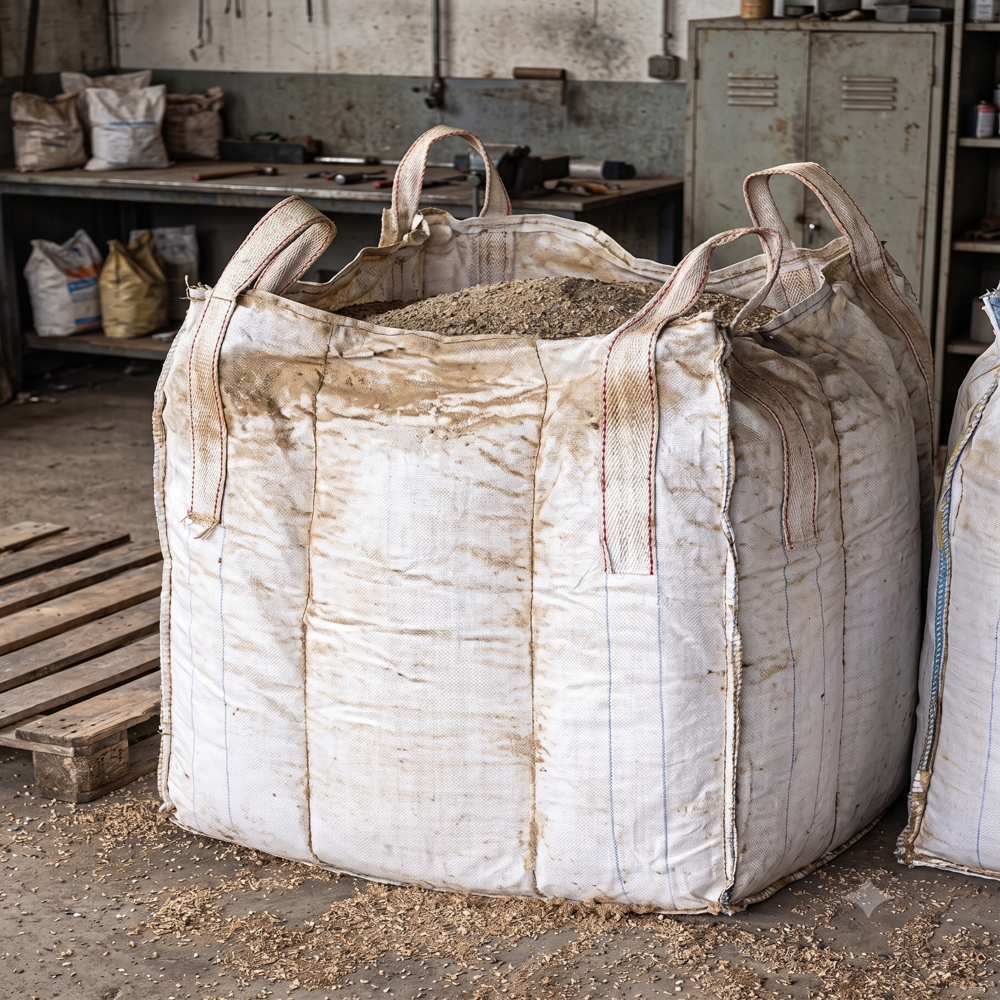
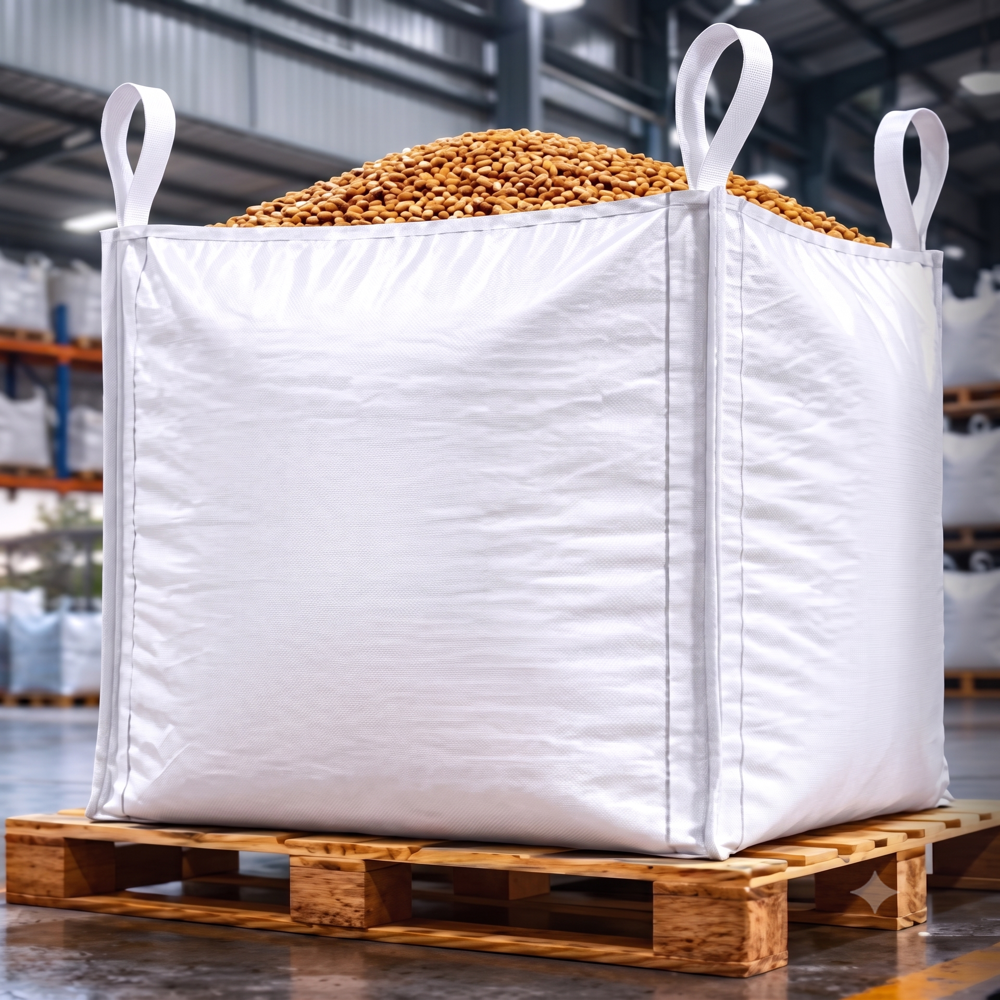
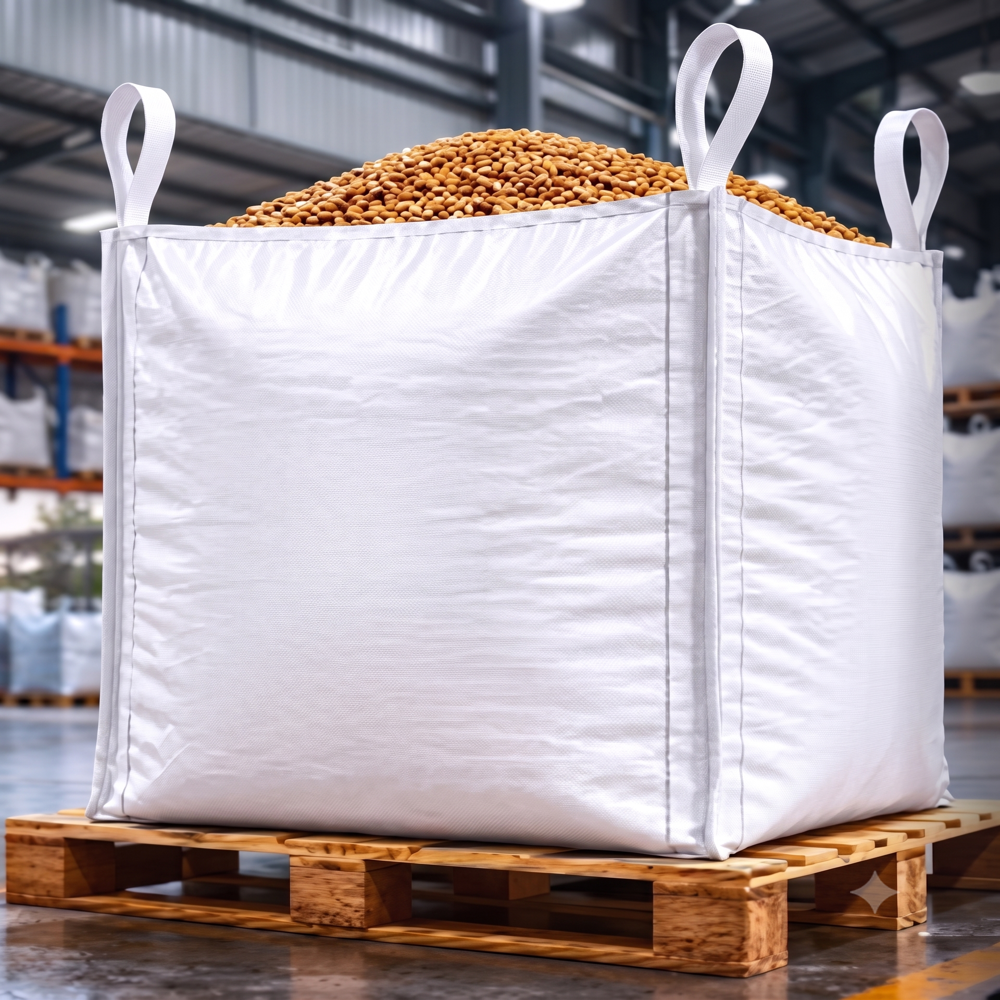
An FIBC 4-Panel Bag (Flexible Intermediate Bulk Container) is one of the most widely used designs in the bulk packaging industry.
Here is a brief breakdown of its construction, key features, and typical uses:
Unlike circular or U-panel bags, a 4-panel bag is constructed using four separate pieces of fabric sewn together to form the vertical sides of the bag, plus a fifth square piece sewn to the bottom to form the base. This method requires sewing along all four vertical corners.
Excellent Shape Retention: Because of the rigid vertical seams at each corner, the bag maintains its square or rectangular shape much better when filled compared to circular bags.
High Safe Working Load (SWL): The reinforced corner stitching provides excellent structural integrity, making it highly durable for heavy capacities (typically ranging from 500 kg to 2,000 kg).
Optimal Stacking & Shipping: Because it resists "bulging" and stays square, it maximizes space on pallets, inside shipping containers, and in trucks.
Due to its stability and strength, it is highly preferred for:
Fine powders and chemicals
Grains, seeds, and food-grade ingredients
Minerals, sand, and construction materials
Here is an overview of the most common top (filling) and bottom (discharging) configurations used for 4-panel FIBC bags, allowing them to be customized for different factory setups:
The top of the bag is designed based on how you load your product:
Open Top: The simplest design where the entire top is completely open. Ideal for manual filling or dealing with large, non-dusty materials.
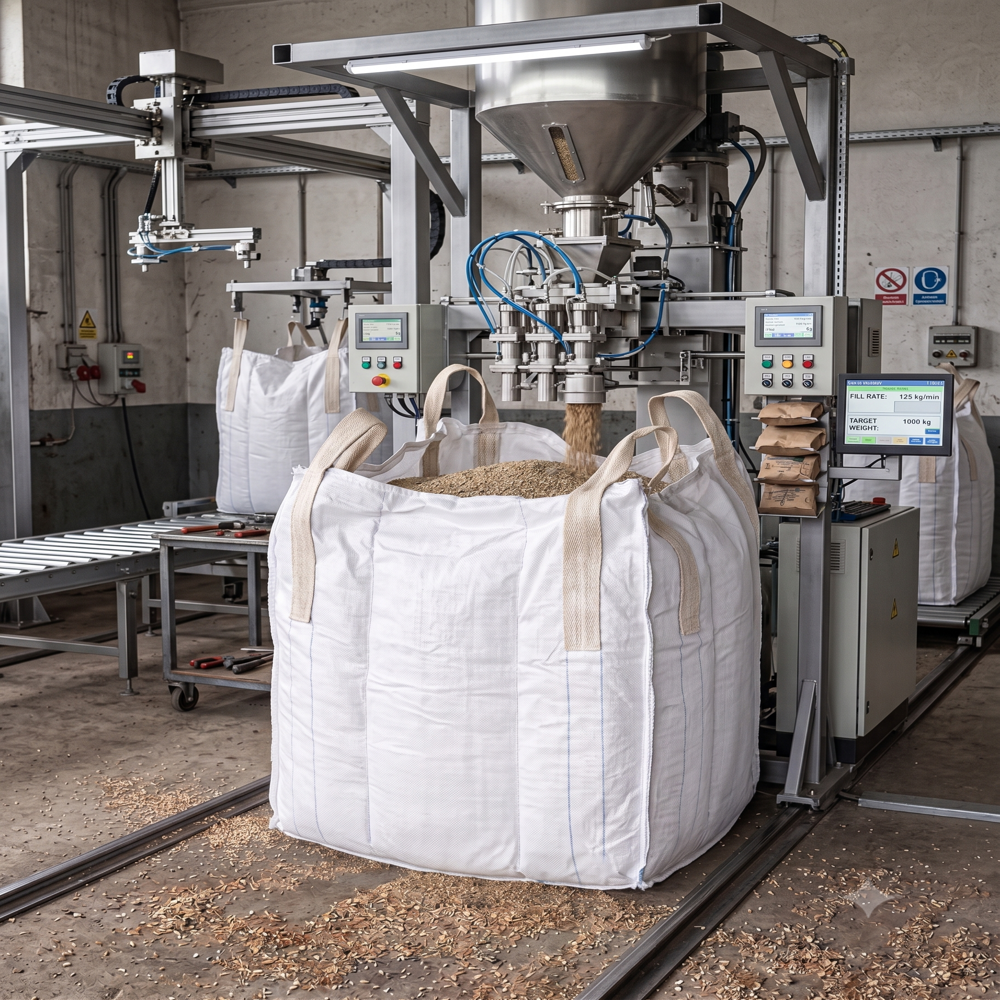
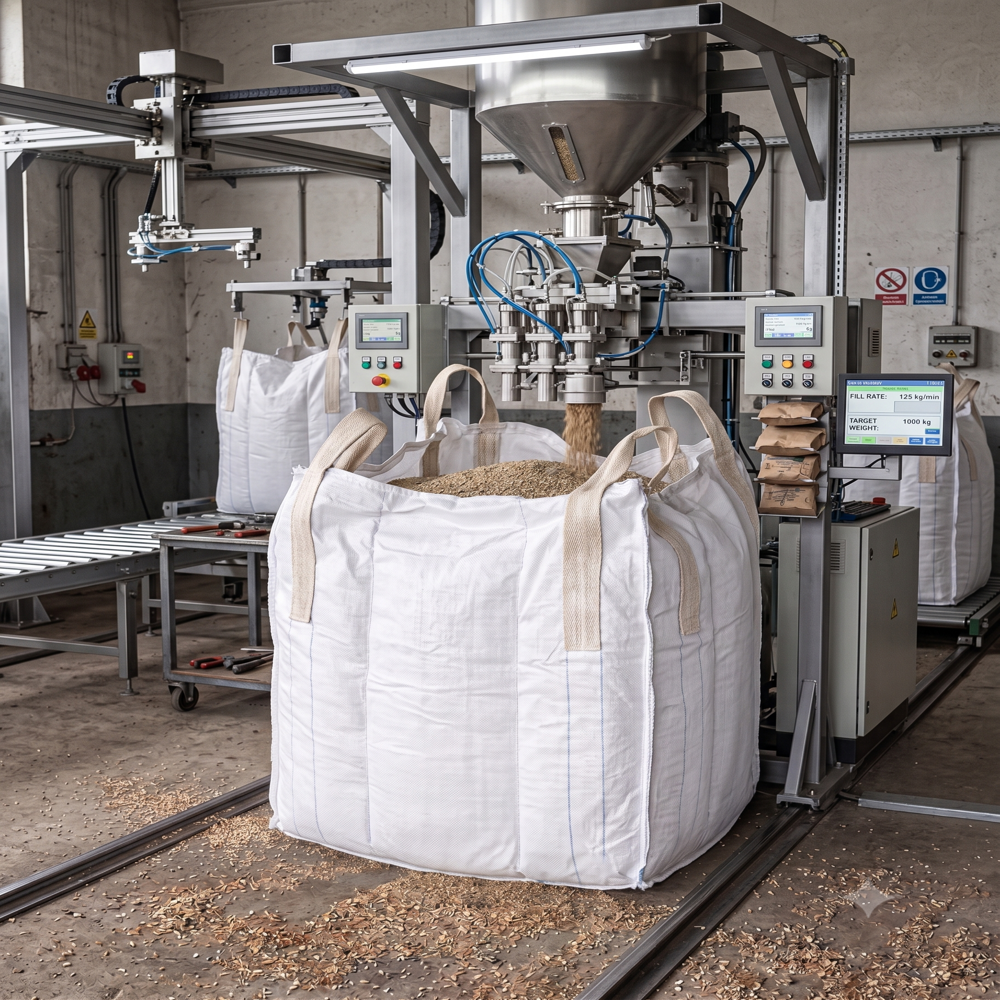
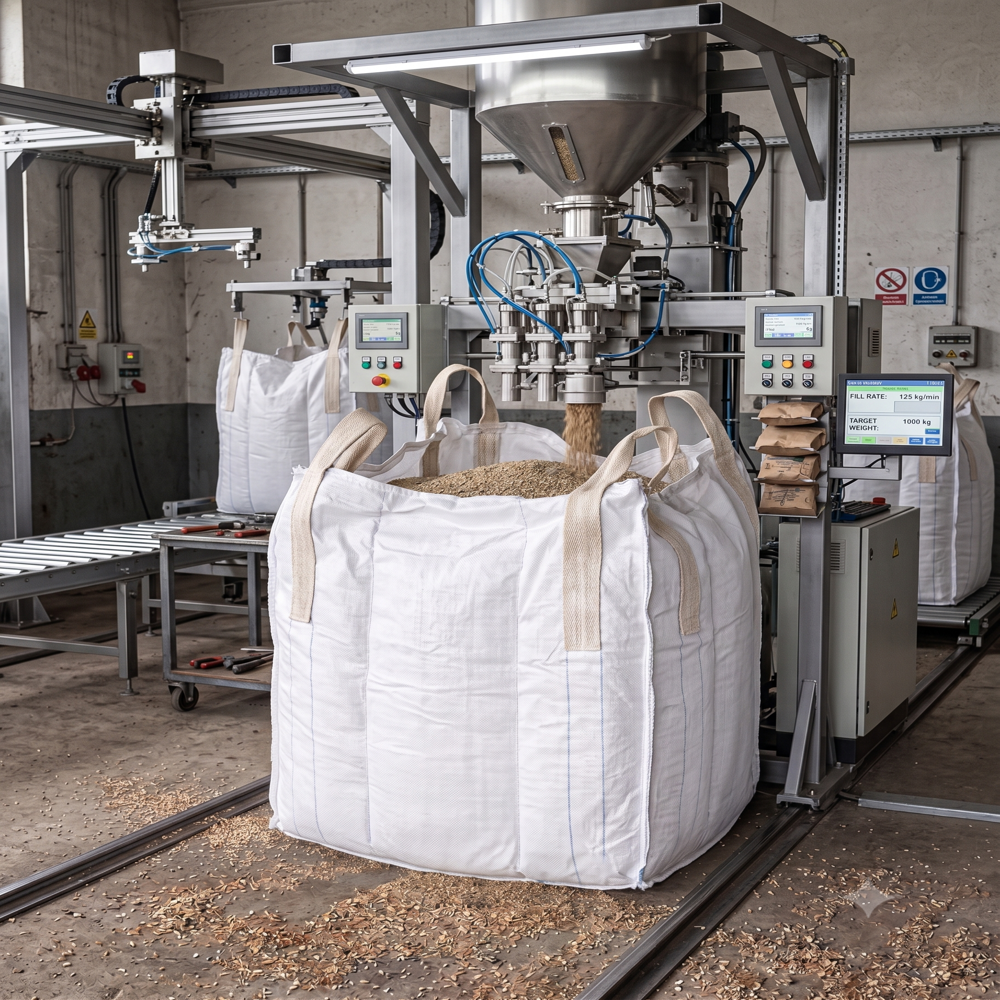
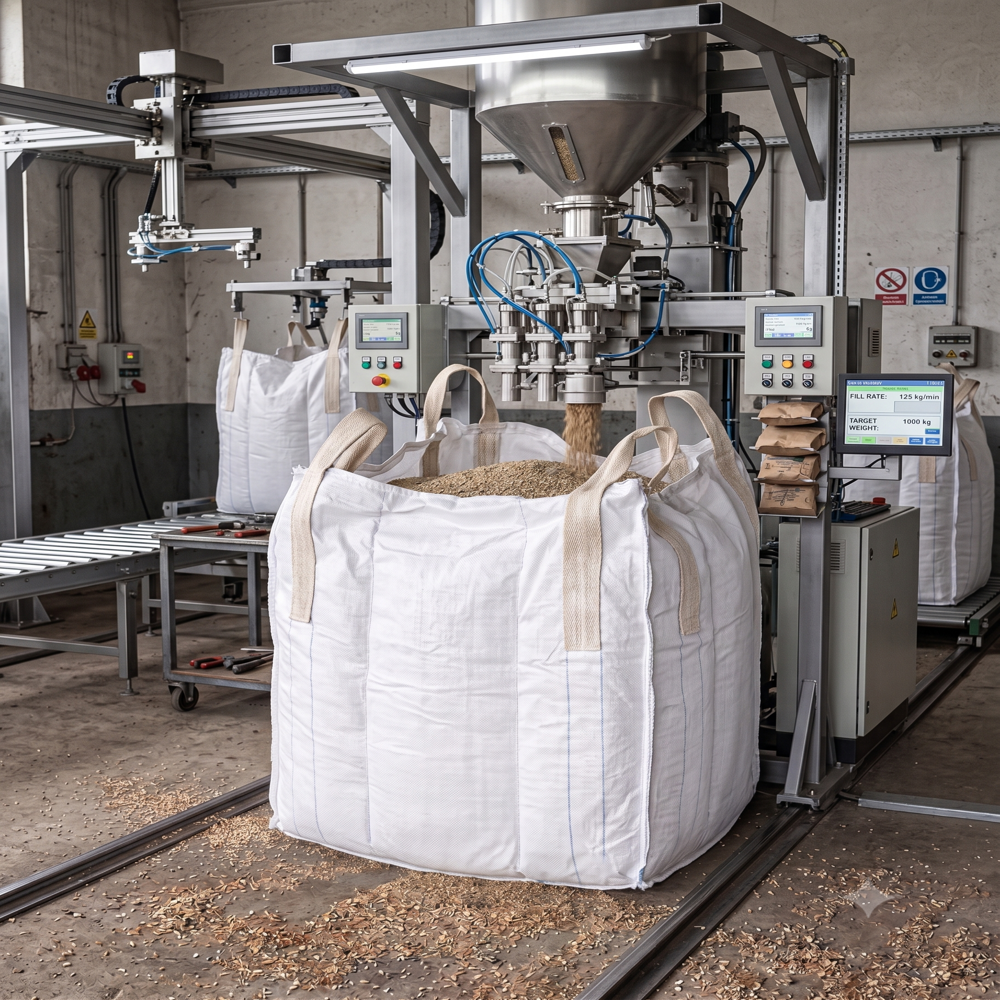
Fill Spout: A cylindrical fabric inlet sewn to the top panel. It connects directly to factory filling pipes to minimize dust and spillage during high-speed automated filling.
Duffle Top (Skirt): Features a lightweight fabric skirt around the top perimeter that can be drawn shut with a tie string. It offers full-width access for easy filling but can be closed to protect the contents afterward.
The bottom design dictates how easily and safely the material can be emptied:
Flat Bottom: A solid, closed base. The bag must be cut open from the bottom to empty it, making it a single-use option for emptying.
Discharge Spout: A cylindrical outlet tube extending from the bottom center, kept tied shut until ready to empty. It allows for a controlled, dust-free flow of material and can be re-closed mid-discharge.
Conical Bottom: The bottom tapers into a funnel shape leading to the spout. This is highly effective for sticky, poorly-flowing, or fine powder materials that tend to get stuck in the corners of a standard flat-bottom bag.
When it comes to lifting a filled 4-panel bulk bag, the choice of lifting loops is crucial because it affects how the bag handles weight and how easily a forklift or crane can pick it up.
For a 4-panel bag design, there are two primary loop configurations used in the industry:
This is the most common configuration for 4-panel bags.
Design: The lifting loops are sewn directly along the vertical corner seams of the bag.
How it works: Because 4-panel bags inherently have four structural corner seams, sewing the loops into these seams distributes the weight evenly down the vertical edges of the bag.
Best for: Standard forklift operations where the driver has a clear angle to approach and hook the loops.
While more common on circular woven bags, cross-corner loops can also be adapted for 4-panel bags.
Design: Instead of being sewn into the corner seams, each loop forms an arch that spans across the corner, sewn into the adjacent side panels.
How it works: This design forces the loops to stand upright and open naturally on their own, rather than laying flat against the top panel.
Best for: Automated forklift systems or crane hooks where the operator cannot manually reach out to open the loops. It allows the forklift tines to easily slide through without human intervention.
To prevent the loops from tearing or wearing out from heavy use, they can be customized with:
Stevedore Straps: Connecting loops that allow a single hook or crane to lift all four corners simultaneously.
Wear Sleeves: Protective fabric wrapped around the top of the loop to resist friction from forklift tines.
When working with FIBC bulk bags, understanding the Safety Factor (SF) is critical to ensuring workplace safety. The Safety Factor represents the ratio of the bag's minimum breaking strength to its Safe Working Load (SWL)which is the maximum weight the bag is certified to carry.
For 4-panel bags, the industry divides bags into two primary safety ratings based on their intended use:
What it means: The bag's structure and loops are tested to withstand 5 times its rated capacity before failing. For example, if a bag has an SWL of 1,000 kg, it must hold 5,000 kg during factory destruction testing.
Usage: These bags are certified for one-time use (single-trip). Once they are filled, shipped, and emptied at their destination, they should be recycled or discarded.
Why: Over time, UV exposure, forklift friction, and stress from transport degrade the woven polypropylene fabric, making a second use unsafe.
What it means: The bag is engineered to withstand 6 times its rated capacity during testing. A bag rated for 1,000 kg must survive up to 6,000 kg of pressure in a test rig.
Usage: These are heavy-duty, multi-trip bags designed to be safely refilled, transported, and emptied multiple times.
Requirement: To maintain this rating, manufacturers usually require the bag to follow a strict cleaning, inspection, and tracking protocol between uses to ensure the fabric hasn't suffered structural damage.
To protect operators and prevent accidental drops when using forklifts or cranes:
Avoid Shock Loading: Never jerk, snatch, or rapidly drop the bag while lifting. Sudden movements exponentially increase the force on the loops, which can exceed the safety factor limits.
Keep Forklift Tines Smooth: Forklift tines must be free of sharp edges or burrs. Sharp metal can easily slice through the heavy polypropylene fabric of the lifting loops under tension.
Lift Vertically: Ensure the forklift tines or crane hooks are spaced correctly so the loops pull straight up. Lifting at a severe angle puts uneven lateral stress on the 4-panel vertical seams, risking a tear.
Never Stand Under a Raised Bag: No matter the safety rating (5:1 or 6:1), pedestrians and operators must never walk or stand underneath a suspended bulk bag.
Here is how the test translates to everyday operations and why these ratings are strictly enforced:
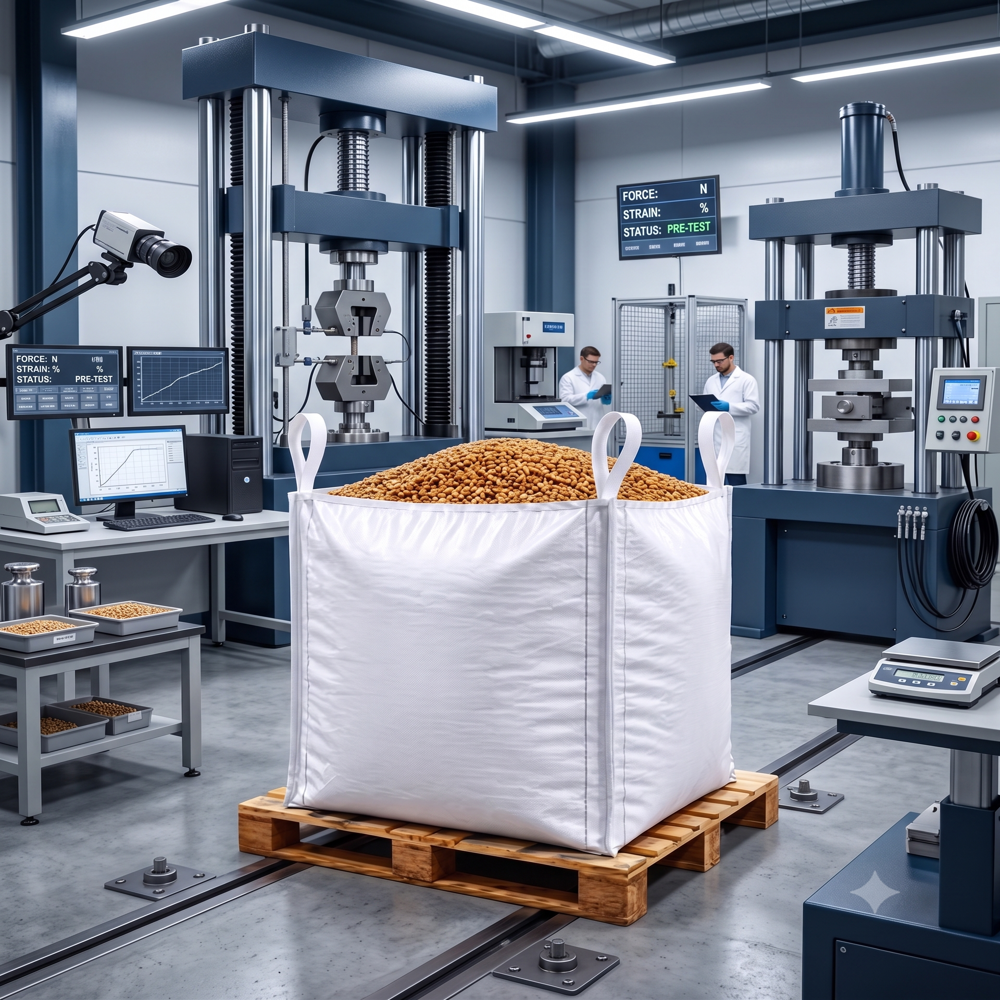
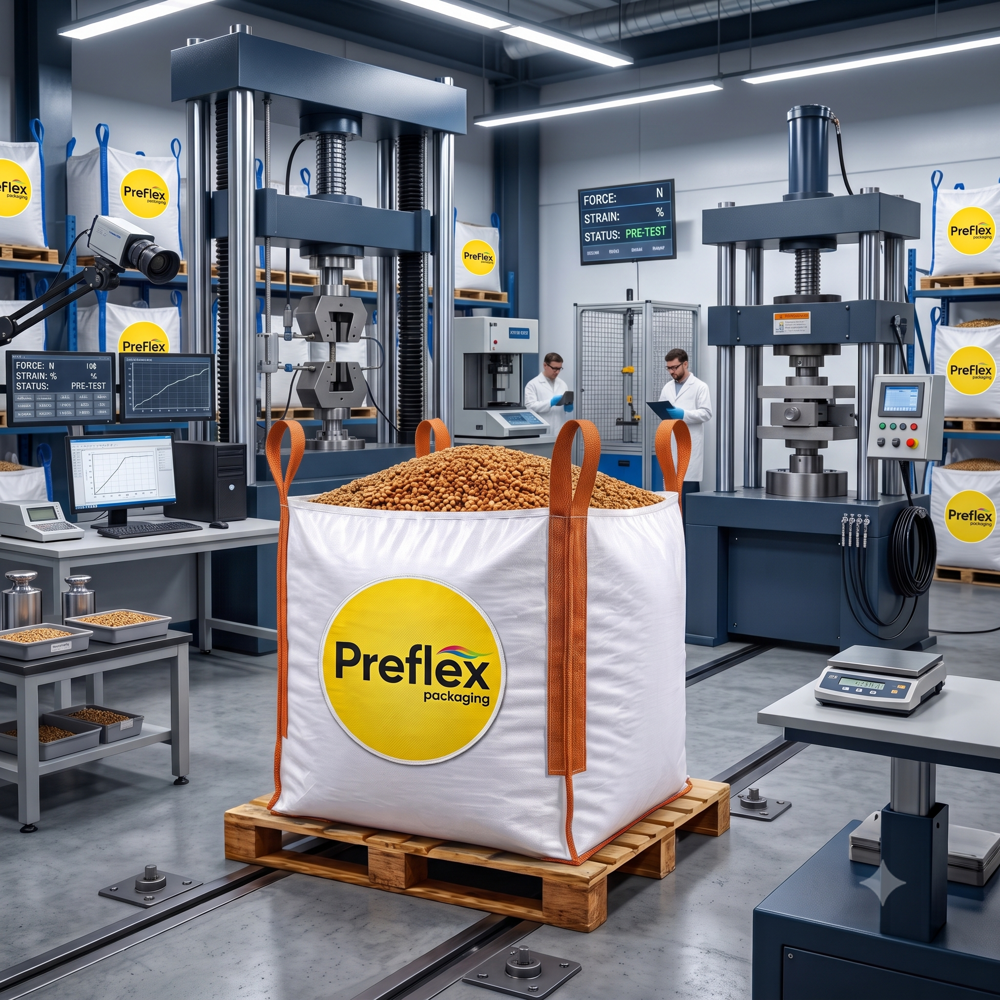
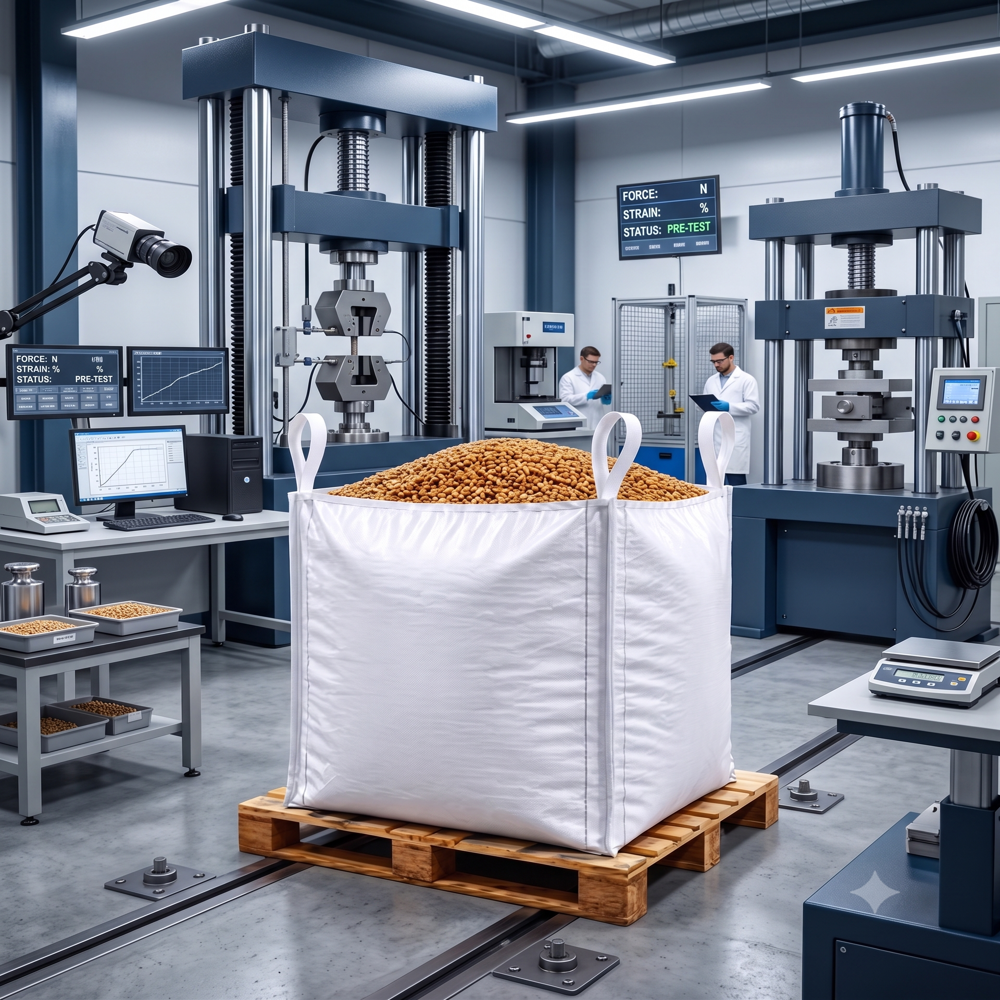
Before a manufacturer can label a 4-panel bag with a 5:1 or 6:1 rating, sample bags must undergo a cyclic top-lift test in a specialized laboratory rig.
The Test: The bag is filled to its rated capacity (e.g., 1,000 kg), and a hydraulic ram pulls the lifting loops upward repeatedly to simulate the bounces and vibrations of transport.
The Final Stage: The machine then pulls the loops with increasing force until the bag physically tears apart. If a 1,000 kg bag tears at 4,800 kg, it fails the 5:1 rating. It must hold at least 5,000 kg to pass.
If your 4-panel bags are meant to carry dangerous goods (like toxic chemicals, corrosive materials, or certain classes of fertilizers), standard 5:1 or 6:1 ratings aren't enough. They must be UN Certified.
UN-rated bags undergo even stricter testing protocols, including:
Drop Testing: The filled bag is dropped from a height of up to 1.2 meters directly onto a concrete floor to ensure it doesn't burst.
Topple Testing: The bag is intentionally knocked over from a standing position.
Righting Test: The bag is lifted from a tipped position using only two loops instead of four.
| Action | 5:1 Single-Trip Bag | 6:1 Multi-Trip Bag |
| Re-use? | Never. Fabric fatigue makes it unsafe. | Yes, after a professional safety inspection. |
| Outdoor Storage? | Limited. Polypropylene degrades quickly under sunlight (UV). | Limited. Even with UV stabilizers, store covered when possible. |
| Repairing Tears? | Never attempt to sew or patch a damaged bag. | Never. Damaged bags must be permanently retired. |
When handling bulk materials, static electricity is a hidden hazard. As dry powders or granules flow rapidly into or out of a 4-panel FIBC bag, friction generates a static charge on the fabric. If that charge sparks in an environment with flammable gases or combustible dust, it can cause an explosion.
To prevent this, the industry classifies FIBC fabrics into four distinct categories based on their electrostatic properties:
How it works: Made from standard woven polypropylene without any static protection.
The Risk: They have no mechanism to dissipate static electricity.
Safe Use: Only use for completely non-flammable products in environments where no flammable gases or combustible dusts are present.
How it works: Similar to Type A, but the fabric has a special low-breakdown voltage coating (less than 6kV).
The Risk: While it prevents large, energetic "propagating brush discharges" (which can ignite gases), it cannot stop low-energy sparks.
Safe Use: Safe for transporting dry, combustible powders. However, never use them if there are flammable solvents, gases, or vapors in the atmosphere.
How it works: The fabric contains a grid of interconnected conductive threads woven into the polypropylene. The loops also contain these conductive threads.
The Requirement: Must be manually grounded (attached to an earth-ground wire) during both the filling and emptying processes.
Safe Use: Entirely safe for highly flammable environments and explosive dusts, provided the bag is properly grounded. If the ground connection is forgotten or fails, the bag becomes highly dangerous.
How it works: Made with static-dissipative fabric containing special antibacterial, static-safe fibers. Unlike Type C, it safely dissipates static charges directly into the atmosphere via a safe mechanism called "corona discharge."
The Benefit: No grounding required. This eliminates human error (forgetting to attach a ground cable).
Safe Use: Safe for handling flammable powders in environments containing flammable gases and vapors.
| Bag Type | Safe for Flammable Dust? | Safe for Flammable Gas/Vapors? | Requires Grounding? |
| Type A | No | No | No |
| Type B | Yes (MIE > 3mJ) | No | No |
| Type C | Yes | Yes | Yes (Strictly Required) |
| Type D | Yes | Yes | No |
Since we have covered construction, filling/discharging options, lifting configurations, safety factors, and anti-static fabrics, you now have a complete technical overview of the FIBC 4-Panel Bag.
The final step in understanding these containers is the manufacturing and quality control process that ensures they meet all these rigorous standards.
To turn raw plastic into a certified 4-panel bulk bag, the material goes through several precise manufacturing stages:
Extrusion: Raw polypropylene resin pellets are melted and extruded into thin plastic sheets, which are then slit into thousands of tiny, high-strength tapes.
Weaving: These tapes are loaded onto massive industrial looms that weave them into the heavy-duty fabric sheets used for the bag's panels.
Cutting: The woven fabric rolls are cut into precise rectangular dimensions for the 4 side panels and the square base panel.
Sewing & Assembly: Highly skilled operators sew the four distinct side panels together along the corners, integrating the lifting loops, top inlets, and bottom spouts.
Inspection & Packaging: Every bag undergoes a final manual inspection for loose threads or defects, is folded, and then compressed into tight bales for shipping.
If you are preparing to order or sample a 4-panel FIBC bag, keeping this quick checklist handy will ensure you get the exact specifications your factory requires:
Dimensions: Width $times$ Length $times$ Height (e.g., $90 text{ cm} times 90 text{ cm} times 120 text{ cm}$)
Safe Working Load (SWL): Usually $500 text{ kg}$, $1,000 text{ kg}$, or $1,500 text{ kg}$
Safety Factor (SF): 5:1 (Single-trip) or 6:1 (Multi-trip)
Fabric Type: Type A, B, C, or D (Based on static risks)
Top Style: Open top, Fill Spout, or Duffle top
Bottom Style: Flat bottom, Discharge Spout, or Conical bottom
Loop Style: Corner-side loops or Cross-corner loops

Price:
Price 20.0 INR / Kilograms
Minimum Order Quantity : 300 Kilograms
Dimension (L*W*H) : 180 X 250 X 80 Millimeter (mm)
Size : 180 X 250 X 80 MM
Tensile Strength : 35 Kilopascals (KPa)
Product Type : Plastic Packaging Products
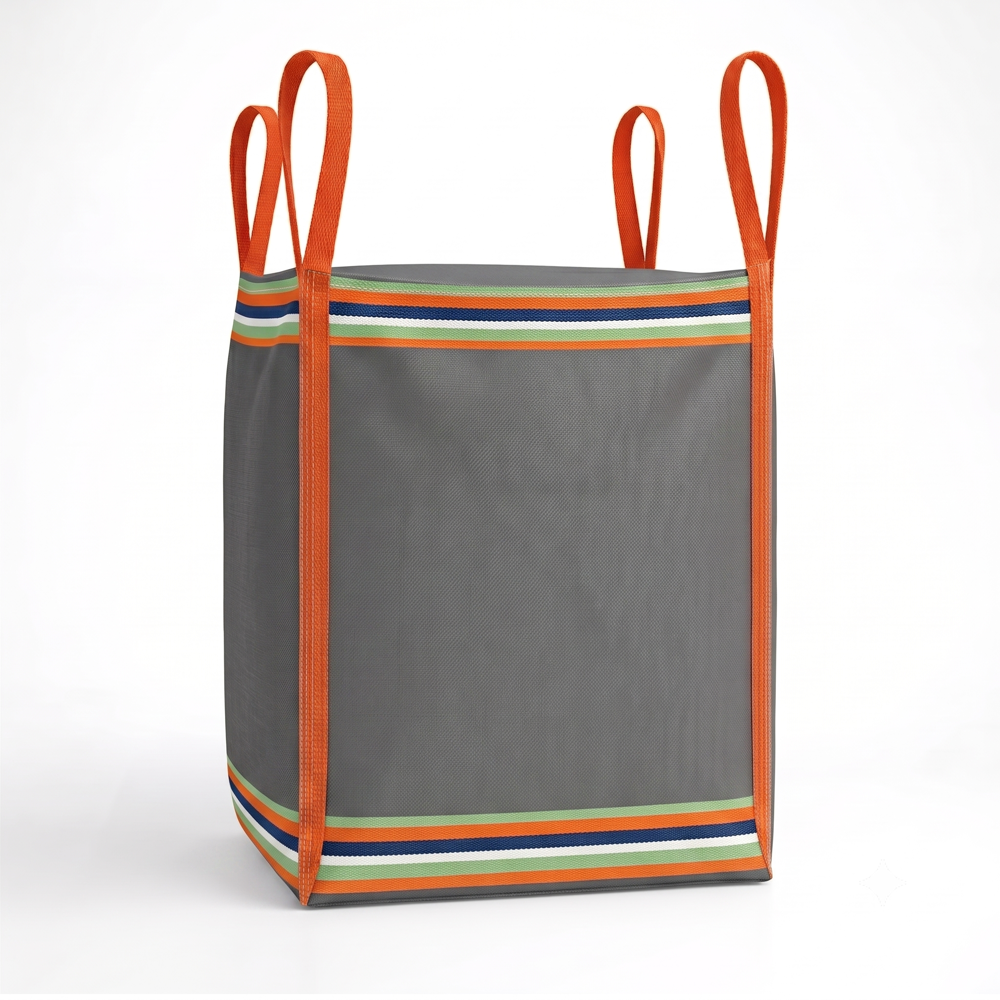
Price 250.0 INR / Piece
Minimum Order Quantity : 300 Pieces
Dimension (L*W*H) : Variable as per size Meter (m)
Size : 100 x 100 x 100
Tensile Strength : High puncture resistance Kilopascals (KPa)
Product Type : Other

Price 12.0 INR / Kilograms
Minimum Order Quantity : 300 Kilograms
Dimension (L*W*H) : 200 mm x 150 mm x 40 mm
Size : Customizable as per requirement
Tensile Strength : 35 MPa
Product Type : Other, Packaging Pouch
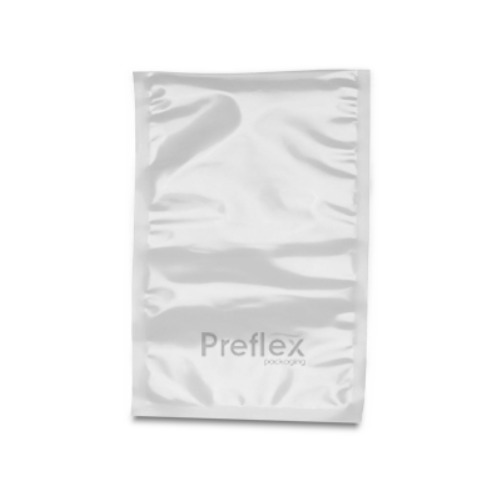
Price 10.0 INR / Kilograms
Minimum Order Quantity : 300 Kilograms
Dimension (L*W*H) : Customized as per requirement
Size : Available in various sizes
Tensile Strength : High
Product Type : Other, Vacuum Packaging Pouch



 English
 Spanish
 French
 German
 Italian
 Chinese (Simplified)
 Japanese
 Korean
 Arabic
 Portuguese
 Send Inquiry
 Send Inquiry

